How Long Does It Take to Get a Private Pilot License in 2026?
Published by:
Matthew Bourguignon
Published on:
Updated on:
Read time:
8 min read
You have the date circled. Maybe it is a family trip next summer, or the day you want to take a friend up with you in the left seat. Before you commit, you want a straight answer to one question: how long does it take to get a private pilot license?
The FAA sets a 40-hour minimum, and at three lessons a week that is about 9 weeks on paper. Most students need more hours than that, so here at Blue Skies Above we plan for about 13 weeks on a realistic 65-hour plan at three lessons a week. Fly less often and the same training stretches into four, five, or more months.
This guide shows where those weeks come from, how your weekly pace changes the total, and which steps outside the airplane belong on your calendar too. If you want the full step-by-step path first, start with our private pilot license guide.
The short answer: about 13 weeks on a realistic plan
Two numbers frame every private pilot timeline. The first is the legal floor. Under Part 61, the FAA rules most independent flight schools train under, you need at least 40 hours of flight time. The second is what real students fly. Nationally, the FAA puts the average closer to 75 hours.
We build our Private Pilot Certificate Full Program around a realistic 65-hour average, and we plan it at about 13 weeks with three lessons a week. Our 40-hour minimums package is planned at about 9 weeks at the same pace. Both plans, side by side:
| Plan | Flight hours planned | Lessons per week | Approximate time to complete |
|---|---|---|---|
| Private Pilot Certificate, Full Program | 65 hours | 3 | about 13 weeks |
| Private Pilot Certificate, FAA minimums | 40 hours | 3 | about 9 weeks |
Your real finish date comes down to weather, your progress, aircraft and instructor scheduling, and the checkride date. We plan around a realistic number so those factors do not catch you by surprise. You can compare both packages in full on our pricing page.
What the 40-hour FAA minimum actually asks you to fly
Forty hours sounds like one number, but it is a checklist of different kinds of flying. Under the rule, those 40 hours include at least 20 hours with an instructor and 10 hours solo. Inside those totals, you need:
- 3 hours of night training, including a cross-country flight of more than 100 nautical miles and 10 full-stop landings
- 3 hours of cross-country training with your instructor
- 3 hours of flying by reference to instruments alone
- 5 hours of solo cross-country, including one solo trip of at least 150 nautical miles with full-stop landings at three airports and one leg of more than 50 nautical miles
- 3 full-stop landings at an airport with an operating control tower
- 3 hours of checkride preparation with your instructor in the two calendar months before your test
Every item on that list takes calendar time as well as flight time. A night cross-country waits for the sun to go down and for good weather after dark. A 150-mile solo trip needs a clear day at three airports, not just at home. Our post on mastering flight instruments shows what those instrument hours look like from the left seat.
The minimum also assumes you are ready the moment the hours are logged. In practice, your instructor signs you off for the checkride when you fly to the standard, and that point often comes after the logbook passes 40.
Why most students land closer to 65 hours than 40
The gap between 40 and 65 hours is skill-building time, and it is normal. Landings are the classic example. Some students find their landing picture in a few lessons. Others need a few more patterns before crosswinds feel calm. Neither is a problem, and both are why we plan above the minimum.
The other big driver is how often you fly. We recommend flying two to three times a week, because frequent lessons build retention and cut down on review. When a week or two passes between lessons, the first part of the next flight goes to getting back to where you were. Those review minutes are real flight hours, and they push your total up and your finish date out.
That is why a realistic plan helps your timeline as well as your budget. If you plan for 40 hours and need 60, the extra weeks feel like a setback. If you plan for 65 hours from day one, every hour you finish under that is good news. Our breakdown of private pilot license cost in 2026 covers the money side of the same gap.
How many weeks your private pilot license takes at your lesson pace
Lesson frequency is the lever that turns hours into weeks or months. The table below uses simple math from our 13-week Full Program plan, about five flight hours a week across three lessons, and spreads the same 65 hours over fewer lessons.
| Lessons per week | Typical student | Approximate time for a 65-hour plan |
|---|---|---|
| 3 | Can fly most weeks without gaps | about 13 weeks (3 months) |
| 2 | Working full time, flying weekends or two set days | about 20 weeks (4 to 5 months) |
| 1 | Squeezing lessons around a packed schedule | 39 weeks or more (most of a year) |
Treat the lower rows as a starting estimate. Fewer lessons a week usually means more review, so the one-lesson pace tends to run longer than the math alone. Weather days and checkride scheduling add time at every pace.
Two lessons a week is still a solid plan. Our guide to weekend flight training shows how a Saturday and Sunday rhythm keeps you on the low end of our recommended pace. Pick a pace you can hold for months without long breaks, even if it is slower than three a week.
The steps outside the airplane that also set your timeline
Flight hours are only part of the calendar. A few paperwork and testing steps run alongside your lessons, and starting them early keeps them from slowing you down at the end.
First, the medical certificate. You do not need one to start lessons, but you need it, along with a student pilot certificate, before your first solo. A third-class medical from an Aviation Medical Examiner is enough for student and private pilot privileges. Scheduling the exam in your first weeks means it is done before your instructor is ready to send you solo.
Second, the FAA knowledge test, often called the written exam. You need to pass it before your checkride. Students who study at home between lessons tend to finish it while they are still flying, so it never becomes the last hurdle. Our guide to the written exam and how to pass it covers how to prepare.
Third, the checkride, the FAA practical test with a Designated Pilot Examiner (DPE), an examiner the FAA appoints to give the test. It has an oral portion and a flight. Your instructor plans the examiner date as you get close to the standard, so the last weeks of training and the test line up. Steady study on the ground also shortens your flight time, and our post on making the most of your ground lessons shows how.
How to build a private pilot timeline you can actually keep
A timeline only works if your schedule and your budget can both hold it. Start with the number of lessons you can fly every week, then work backward from the date you circled. Three lessons a week gives you the roughly 13-week plan. Two a week gives you a plan closer to five months.
Money is the other half. Students who run out of budget halfway through often pause, and a pause costs review hours when you come back. Financing helps some students keep a steady pace instead. We work with Stratus Financial and Flight Training Finance, and financing is available to qualified applicants. You can compare the options on our financing page.
Here at Blue Skies Above, you pay for the time you actually fly, with no minimum billing. Flying regularly and planning for realistic hours is how you keep both the calendar and the total under control. Contact us through our contact page to plan a schedule that fits your week, and we will help you set a pace you can keep.
How Long It Takes to Get a Private Pilot License: FAQ
Can I get my private pilot license in 40 hours?
Forty hours is the legal minimum under Part 61, and our minimums package is planned at about 9 weeks. Most students need more, so we build our Full Program around a realistic 65-hour average.
How many months does it take to get a PPL license?
At three lessons a week, our realistic plan takes about 13 weeks, or about three months. At two lessons a week, plan for roughly four to five months. See our pricing page for both plans.
What is the national average for private pilot hours?
The FAA puts the national average at about 75 hours. Our Full Program plan uses 65 hours, built on steady lessons at our quiet Lanett airport.
Do I need a medical before I start flying?
No. You need a medical and a student pilot certificate before your first solo, not before your first lesson. Getting the medical done early keeps it off your critical path. Our first 30 days guide shows what the early weeks look like.
Is Part 141 faster than Part 61?
Part 141 approved private pilot courses use a 35-hour minimum, but actual completion time still comes down to the student, the schedule, and the school. Our post on Part 61 vs Part 141 flight schools explains the difference.
What slows a private pilot timeline down the most?
Long gaps between lessons. Flying two to three times a week keeps review time low. Contact us to set up a pace that fits your schedule.
Fly Your First Lesson and Start Your Timeline
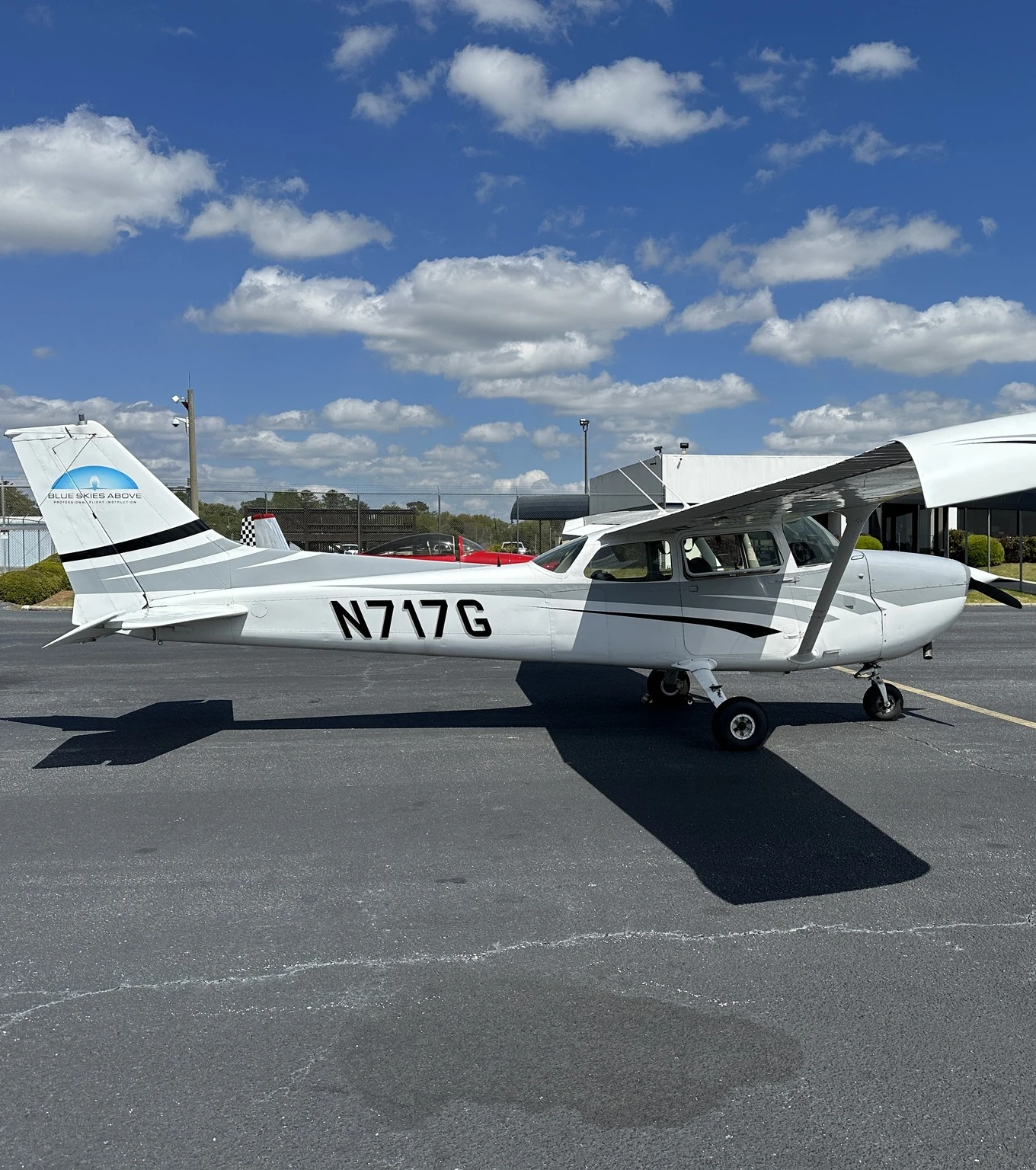
The fastest way to turn a number on this page into your own plan is to fly. On a Discovery Flight, you take the controls of a Cessna 172 with an instructor at Lanett Municipal Airport, then sit down afterward to talk through how many lessons a week fit your life and what that means for your finish date.
Book your Discovery Flight and start counting your weeks from the left seat.