Private Pilot Training Milestones: When Each Happens in 2026
Published by:
Matthew Bourguignon
Published on:
Updated on:
Read time:
8 min read
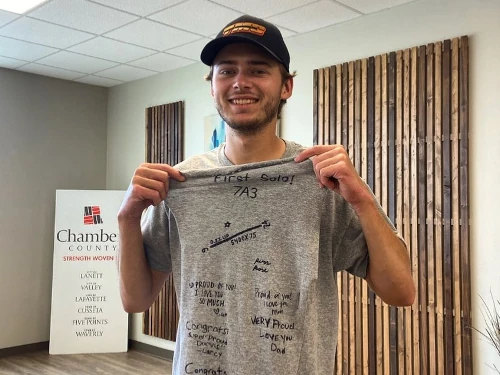
The day your instructor climbs out and leaves the right seat empty is one you will remember for a long time. If you are just starting out, you probably want to know when that day comes, and what happens before and after it on the way to a private pilot certificate.
Private pilot training milestones come in a set order: your medical and student pilot certificate, then pre-solo training and your first solo, then the knowledge test, cross-country and night training, and finally checkride prep and the practical test. On our realistic 65-hour plan at three lessons a week, that whole path runs about 13 weeks. Each milestone has a rule behind it, and knowing those rules early keeps one late item from holding up the rest.
This guide walks through each stage, what unlocks it, and where it tends to fall in a realistic plan. If you want the total duration and how your weekly pace changes it, start with our guide to how long it takes to get a private pilot license.
Your private pilot milestones at a glance
Think of your training in three stretches: the early weeks, the middle, and the final stretch. Here is how the milestones line up on our Private Pilot Certificate Full Program, which we build around a realistic 65-hour average.
| Milestone | What unlocks it | Where it tends to fall in the Full Program |
|---|---|---|
| Medical and student pilot certificate | Exam with an Aviation Medical Examiner, application with your instructor | Early weeks, before solo |
| First solo | Pre-solo maneuvers, pre-solo knowledge test, solo endorsement | Early part of training |
| Knowledge (written) test | Instructor endorsement, then the FAA test | Middle, well before the final stretch |
| Cross-country and solo cross-country | Navigation training, cross-country endorsement, per-flight planning review | Middle |
| Night training | 3 hours with your instructor after dark | Middle, timed with the season |
| Checkride prep and practical test | 3 hours of prep in the 2 calendar months before the test, instructor endorsement | Final stretch |
Every student moves at a different pace, so your instructor sets the timing of each milestone based on how you fly, not on a calendar alone. The order above is the part you can count on, because the rules build it in. Our 40-hour minimums package follows the same order in about 9 weeks at three lessons a week. You can compare both plans on our pricing page.
Get the medical done before solo is even close
You can start flying without a medical or a student pilot certificate. You need both before your first solo, though, and that is where students lose time without meaning to. If your landings are ready and your paperwork is not, you wait on the ground.
The student pilot certificate is open to you at 16 years old for airplanes, as long as you can read, speak, write, and understand English. You will need to be 17 to earn the private pilot certificate itself. A third-class medical from an Aviation Medical Examiner covers student and private pilot flying. If you have a medical history question, talk it through with the examiner before you book.
We suggest scheduling the exam in your first few weeks of lessons. Then it is done long before your instructor starts talking about solo. Our post on your first 30 days of private pilot training shows what those early lessons look like.
When student pilots solo, and what has to happen first
Your first solo comes in the early part of training, once a few specific gates are open. There is no fixed hour for it. It happens when you fly the airplane safely and consistently on your own, and the rules spell out what that means.
Before you solo, you need three things:
- Logged training on the pre-solo maneuvers, including takeoffs and landings, traffic patterns, stalls, emergency procedures, slips, and go-arounds
- A pre-solo knowledge test written and given by your instructor, covering the rules, the local airport, and your airplane. Your instructor reviews every missed answer with you before you go.
- A solo endorsement in your logbook for the make and model you will fly
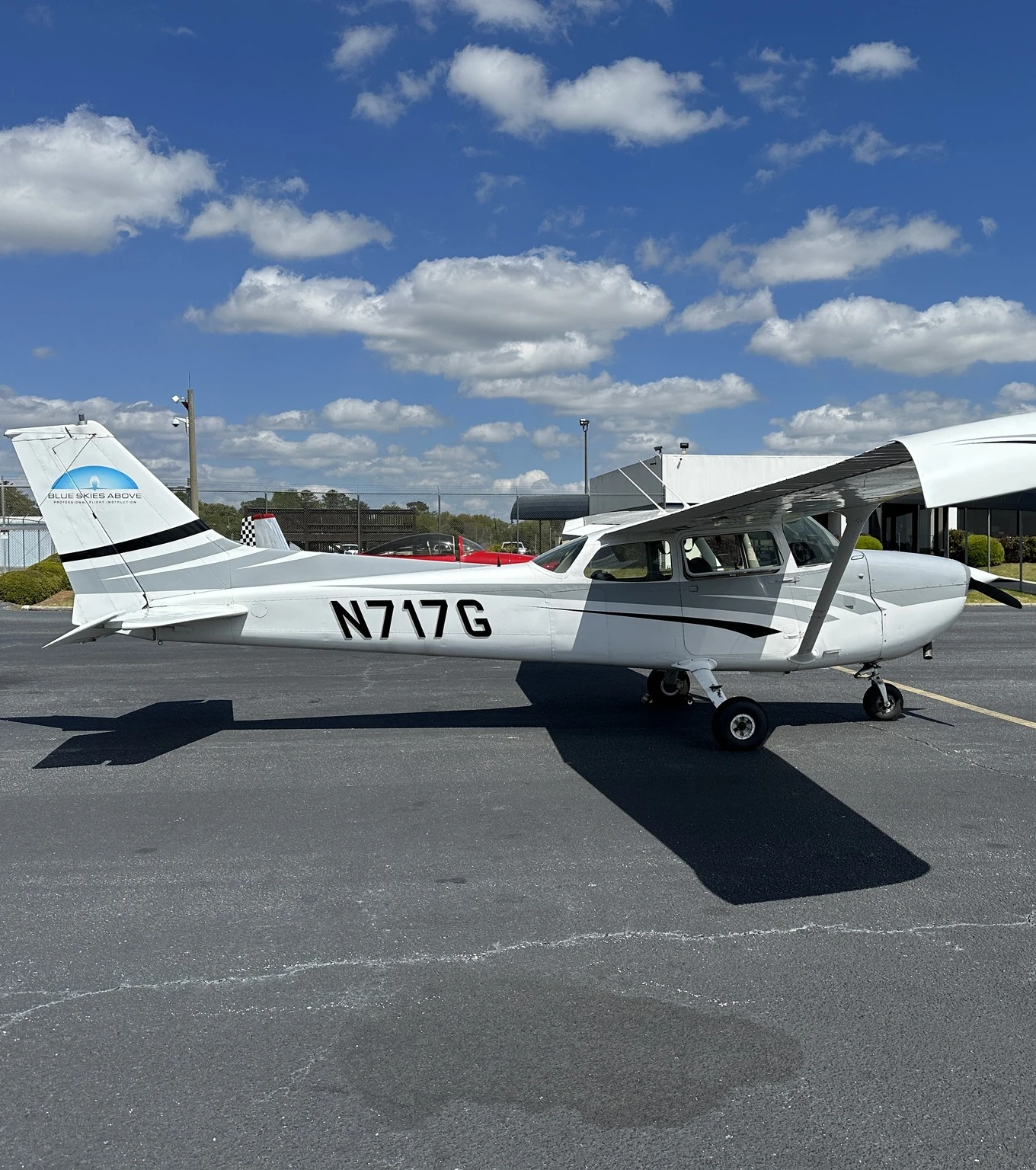
Landings usually set the date. Some students find a steady landing picture quickly, and others need more trips around the pattern before crosswinds feel calm, which is normal. Our post on why we train in the Cessna 172 explains why its stable, predictable handling suits new pilots.
One detail ties solo to your pace. Your solo endorsement has to be refreshed every 90 days by your instructor. If you fly steadily, that is routine. After a long break, you come back to review flights first.
Take the knowledge test in the middle, not at the end
The knowledge test, often called the written exam, is the FAA’s multiple-choice test on rules, weather, navigation, and aircraft systems. You need an instructor endorsement to take it and a passing result before your checkride.
Students get caught on timing. Leave it until the end and you can be ready to fly the checkride with the test still ahead of you. We like to see it done well before the final stretch, while your ground lessons are fresh. Your passing result stays good for a checkride for 24 calendar months, so there is no penalty for finishing it early.
Studying for the written also pays off in the air. Weather and navigation knowledge makes cross-country planning faster. Our guide to the written exam and how to pass it covers how to prepare, and our tips on making the most of your ground lessons help you study between flights.
Cross-country and solo cross-country fill the middle of training
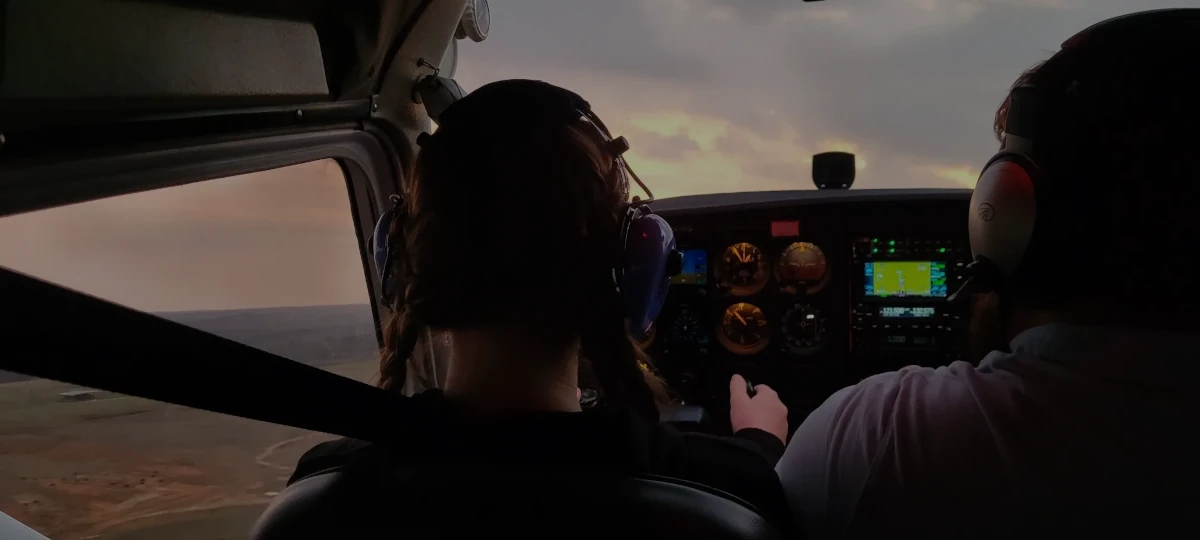
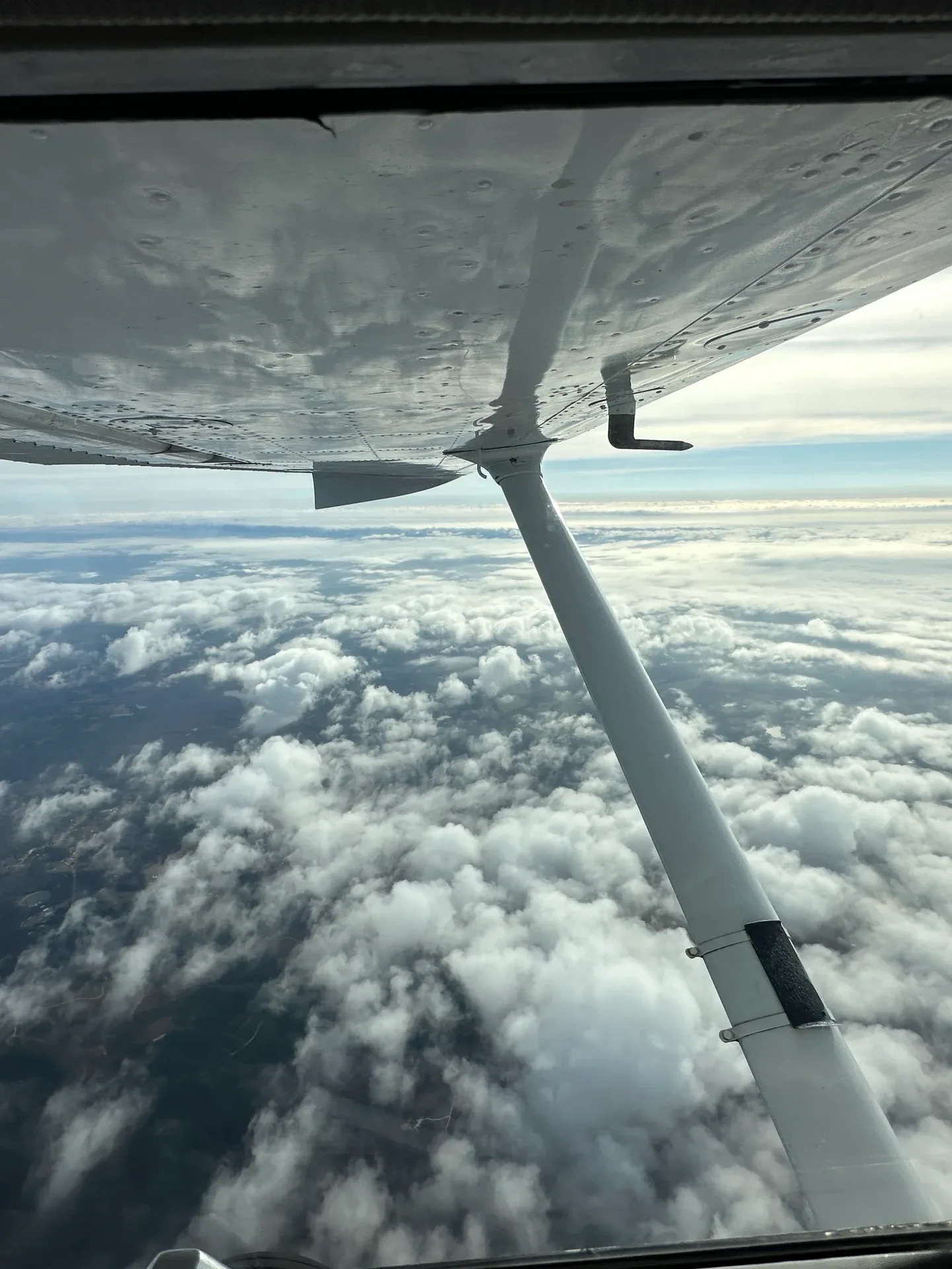
Once you solo near home, training starts to go somewhere. A cross-country flight, in private pilot terms, is a trip to another airport using real navigation. You fly at least 3 hours of cross-country with your instructor first, learning to plan with a chart, read weather reports, use the radios to navigate and talk to controllers, and handle short-field and soft-field landings.
Before your first solo cross-country, your instructor adds a cross-country endorsement. Then each solo trip gets its own logbook endorsement after your instructor reviews your planning. That review is a good habit: you spread out the chart, walk through fuel, weather, and checkpoints, and only then head to the airplane.
The rule asks for 5 hours of solo cross-country, including one long trip of at least 150 nautical miles with full-stop landings at three airports and one leg of more than 50 nautical miles. That long solo trip is where all your planning gets put to work. You also need three full-stop landings at an airport with an operating control tower. If radio calls make you nervous, our student pilot guide to radio communication helps.
Weather has a big say in this stretch. A cross-country needs good conditions at every stop, so flexible days in your schedule help this stretch go smoothly.
Night flying fits around the season
The night requirement is flown with your instructor. You need 3 hours of night training, including one cross-country of more than 100 nautical miles total and 10 full-stop takeoffs and landings at an airport. Solo night flying is not part of the private pilot minimum.
Night lessons usually land in the middle of training, often around your cross-country work, because they build on the same navigation skills. The season changes how easy they are to fit. In winter it gets dark earlier, so a night lesson can happen in the early evening. In summer you wait until later.
Night flying also leans on your instrument skills. The 3 hours of flight by reference to instruments you log during training help you stay oriented when the horizon fades. Our post on mastering flight instruments shows what that work looks like.
The final stretch: checkride prep and the practical test
The last milestone has a clock built into it. You need 3 hours of checkride preparation with your instructor in the two calendar months before your test, and your instructor’s endorsement has to show training in that same window. So the final stretch is for polishing the maneuvers you already fly.
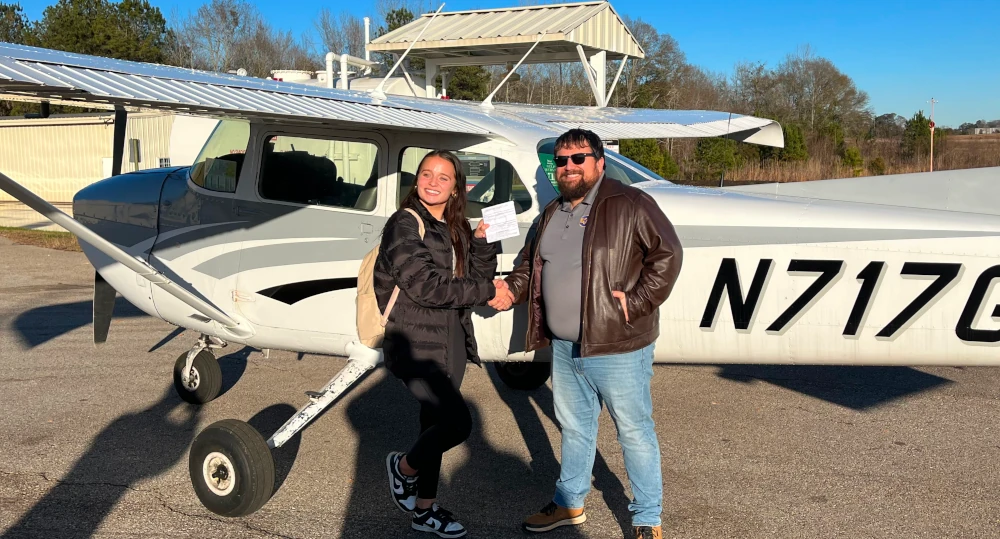
The checkride is the FAA practical test, given by a Designated Pilot Examiner (DPE), an examiner the FAA appoints. It has an oral portion, where you talk through planning, rules, and decisions, and a flight portion, where you fly the maneuvers to the standard. Your instructor recommends you once you are ready and plans the examiner date as you get close, so the final weeks of training and the test line up.
Lessons close together keep your maneuvers sharp for the examiner. If funding is what could slow you down near the end, financing is available to qualified applicants through Stratus Financial and Flight Training Finance. Compare options on our financing page, and remember that you pay for the time you actually fly, with no minimum billing.
How to keep your milestones on schedule
Most milestone delays come from items that were ready to start earlier than they did. A few habits keep each gate open on time:
- Book your medical in the first weeks, before solo is on the table
- Study for the written while you fly, and take it in the middle of training
- Keep two to three lessons a week, the pace we recommend, so endorsements stay current and review stays short
- Leave a little flex in your week for cross-country weather
If weekdays are tight, our guide to weekend flight training shows how a Saturday and Sunday rhythm still moves you through each milestone. Contact us through our contact page to map your milestones to your calendar.
Private Pilot Training Milestones: FAQ
When do student pilots solo?
In the early part of training, once you have logged the pre-solo maneuvers, passed your instructor’s pre-solo knowledge test, and received a solo endorsement. There is no fixed hour. Our first 30 days guide covers the lessons that lead up to it.
Do I need a medical before my first lesson?
No. You need a medical and a student pilot certificate before your first solo. Booking the exam early keeps it off your critical path.
Can I take the written test before I solo?
Yes, with your instructor’s endorsement. Your passing result stays good for a checkride for 24 calendar months. See our written exam guide.
Do I have to fly solo at night?
No. The night requirement for a private pilot is 3 hours with your instructor, including a night cross-country and 10 full-stop landings.
How long is the whole private pilot timeline?
On our realistic 65-hour plan at three lessons a week, about 13 weeks. Our private pilot timeline guide shows how fewer lessons a week change the total.
See Your First Milestone From the Left Seat
Every milestone on this list starts with one flight. On a Discovery Flight, you take the controls of a Cessna 172 with an instructor at Lanett Municipal Airport, then talk through how your first solo, cross-country, and checkride could fit into your year.
Book your Discovery Flight and take the first step toward your first solo.