How to Get Your Private Pilot License Faster in 2026: 8 Habits
Published by:
Matthew Bourguignon
Published on:
Updated on:
Read time:
9 min read
Two students start the same week on the same plan. By lesson six, one of them sits down in the airplane already knowing the maneuver, because she rehearsed it at the kitchen table the night before. The other opens the syllabus in the parking lot. Over a few months, she spends her lessons on new material while the other student keeps repeating old ones.
If you want to know how to get a private pilot license faster, start with what you control. The FAA minimum under Part 61 is 40 hours, and we build our Full Program around a realistic 65-hour average, about 13 weeks at three lessons a week. Weather, aircraft inspections, and examiner scheduling still take their share, and no habit removes them. These eight habits keep every week of training moving forward, so your timeline stays close to the plan.
For the full picture of total duration and pace, read our guide to how long it takes to get a private pilot license. This post is the playbook for staying on it.
The eight habits that keep your training on pace
Here they are in the order you will use them during your Private Pilot Certificate training. Most cost nothing but a little planning.
| Habit | When you start it | What it keeps moving |
|---|---|---|
| 1. Book lessons as a steady weekly block | Before lesson one | Retention from flight to flight |
| 2. Start your medical early | First few weeks | Your path to first solo |
| 3. Use a home-study ground course | First week | Your knowledge test endorsement |
| 4. Pass the knowledge test early | Middle of training | A final stretch that is all flying |
| 5. Arrive briefed on the next lesson | Every lesson | New material in every flight |
| 6. Chair fly between lessons | Every week | Procedures and flows |
| 7. Debrief and track weak areas | After every lesson | The right focus next time |
| 8. Hold flexible slots for weather | Every week | Momentum on bad-weather days |
Habits 1 and 8 are about your calendar. The other six happen on your own time, between lessons, and they decide how much each hour in the airplane can teach you. Our Private Pilot Certificate program is built around the same steady rhythm.
1. Book your lessons as a steady weekly block
We recommend flying two to three times a week. More frequent lessons reinforce what you learned and reduce the need for review. Our 13-week plan assumes three lessons a week, and that pace is the basis for every timeline we quote.
The habit behind the number is booking a recurring block: the same days, the same times, every week. When you are paired with a Certified Flight Instructor (CFI), you build a plan around your goals and availability. Put those lesson days on your calendar like work shifts, and give notice early when a week changes. A steady pace also protects your solo privileges later, since your solo endorsement has to be refreshed every 90 days.
If budget is what would break the block, plan for it before you start. Financing is available to qualified applicants through Stratus Financial and Flight Training Finance, and our financing page explains both. Contact us to set a schedule that fits your week.
2. Start your medical in your first few weeks
You can take lessons before you have a medical, but you need one, along with a student pilot certificate, before your first solo. A third-class medical from an Aviation Medical Examiner (AME) covers student and private pilot flying.
Make the appointment in your first few weeks. If the exam is routine, it is done and out of the way. If your history raises a question, the review starts while you are still flying with your instructor, instead of the week you are ready to go alone. For any medical question, talk to an AME before you book. Our first 30 days guide shows where the medical fits into your first month.
3. Use a home-study ground course from day one
The FAA lets you prepare for the knowledge test with a home-study course. Your instructor reviews your work and gives you the endorsement you need to take the test. That means your ground knowledge can grow every evening at home, on your schedule, instead of waiting for a classroom slot.
Here at Blue Skies Above, we partner with Gleim Aviation for training materials and exam prep tools, and our Full Program includes a ground school kit and 30 hours of ground instruction with your instructor. A good rhythm is short study sessions on the days you do not fly, matched to whatever your next flight lesson covers. Our tips on making the most of your ground lessons go deeper on study technique. You can see all our training partners on our partners page.
4. Pass the knowledge test before the final stretch
The knowledge test, often called the written exam, is the FAA’s multiple-choice test on rules, weather, navigation, and systems. Your passing result stays good for a checkride for 24 calendar months, so taking it in the middle of training costs you nothing.
Your test report also lists the knowledge areas you missed, and before your checkride your instructor has to sign off that you now know them. Clearing that list during the middle of training means your final weeks are about flying, with no studying left to squeeze in. Our guide to the written exam and how to pass it covers preparation, and our milestones guide shows where the test sits among the other steps.
5. Arrive briefed on what the next lesson covers
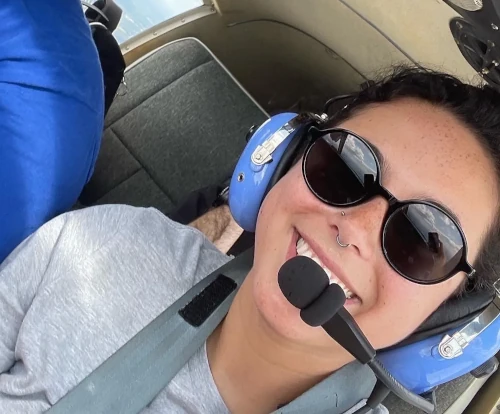
Every lesson has a plan. Before you leave the airport, ask your instructor what the next lesson will cover, then read up on it before you come back. Know the maneuver, the steps, and the numbers you will be watching, such as airspeeds and altitudes.
When you show up already briefed, the preflight briefing becomes a quick check of what you know instead of a lecture, and more of the flight goes to practice. Bring your questions on paper. Staying consistent, studying regularly, and asking questions are the habits we see carry students through the whole program. Our instructors would always rather answer a question on the ground than in the traffic pattern.
6. Chair fly the lesson at home
Chair flying is rehearsing a flight at home. You sit in a chair with your checklist, picture the cockpit, and talk through each step out loud: the before-takeoff check, the turn to downwind, the power and flap settings on approach. It costs nothing, and it does not count as logged flight time.
Chair flying builds flow. Checklists and radio calls that you have said out loud five times at the kitchen table come out smoother in the airplane, which leaves more attention for flying. Many students use it for radio practice too. Our post on handling radio communication anxiety shows how rehearsing calls on the ground makes the real ones easier. A photo of the Cessna 172 panel taped to the wall makes it easier to picture; our post on why we train in the Cessna 172 explains the airplane you will be picturing.
7. Debrief every lesson and track your weak areas
After each flight, your instructor talks through what went well and what needs work. Write it down before you drive home. Three lines are enough: what improved, what still felt shaky, and what to read before next time.
Over a few weeks, that notebook becomes a list of your weak areas, and it tells you where to aim your study and your chair flying. If the flare keeps feeling off, or crosswind corrections come late, you and your instructor can build the next lesson around it instead of finding it again. Keep the list next to your knowledge test topics too. Our ground lessons guide shows how instructor feedback turns into study targets.
8. Hold flexible slots for weather days
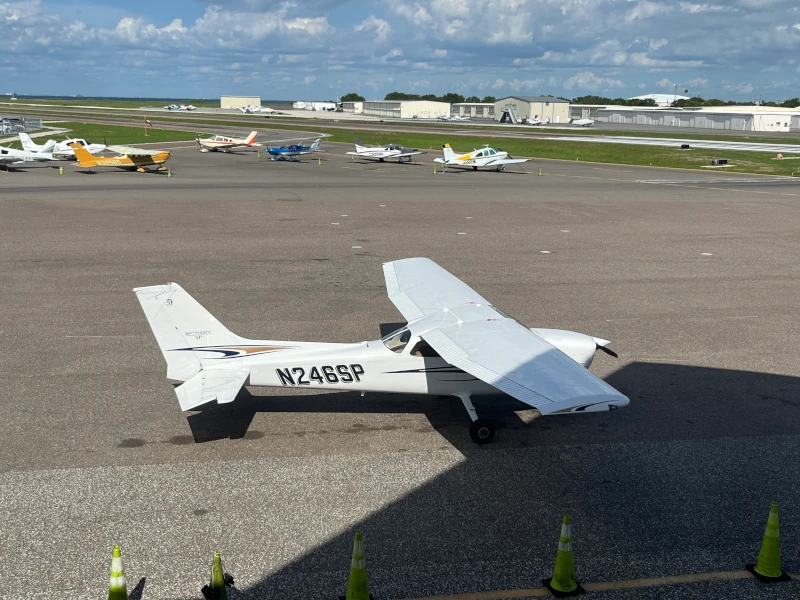
Weather will cancel some lessons. Your instructor makes the go or no-go call for safety, and solo flights have stricter limits, such as at least 3 statute miles of visibility in daylight with the ground in sight.
The habit is to plan for it. Keep one backup slot in your week so a canceled flight can move instead of disappearing. On a gray morning, switch to a ground session on weight and balance, a cross-country plan, or your weak-area list, so the weather day still counts. Our weekend training guide shows how booking both weekend days does the same job. If you want the full list of what slows training down, our checklist of flight training delays covers the problems side.
Put the habits together in a realistic week
Here is what a week on our three-lesson plan can look like with all eight habits running. On Monday evening, you spend half an hour on your home-study course and read up on Tuesday’s lesson. Tuesday you fly, then write your three debrief lines in the car. Wednesday evening you chair fly the next lesson and do a few practice questions, and Wednesday afternoon stays open as a backup slot in case Tuesday’s weather turned. Thursday and Friday are your other two flight days.
You do not need a bigger budget for any of this. With no minimum billing, you pay for the time you fly. We plan our Full Program at about 13 weeks and our 40-hour package at about 9 weeks, each at three lessons a week, and you can compare both plans side by side.
How to Get Your Private Pilot License Faster: FAQ
What is the fastest way to get a private pilot license?
Fly on a steady schedule and do your preparation between lessons. We recommend two to three lessons a week, and our timeline guide shows how pace changes the total.
Can I study for the written test at home?
Yes. The FAA allows a home-study course, and your instructor reviews it and endorses you for the test. Our written exam guide covers preparation.
When should I take the knowledge test?
In the middle of training, well before the final stretch. Your result stays good for a checkride for 24 calendar months. Our milestones guide shows the timing.
Does chair flying count toward my hours?
No. It is practice at home, and only flight time counts toward the FAA hours. It helps your flows and radio calls feel familiar before you fly. See our radio communication guide for one way to use it.
Do I need a medical before my first lesson?
No. You need it before your first solo, so book it in your first few weeks. Our first 30 days guide explains the order.
How do I pay for a steady schedule?
With no minimum billing, you pay for the time you fly, and financing is available to qualified applicants. Visit our financing page to compare options.
Set Up Your Habits on a Discovery Flight
The easiest time to build these habits is before lesson one. On a Discovery Flight, you take the controls of a Cessna 172 with an instructor at Lanett Municipal Airport, then sit down to talk through your lesson days, your medical timing, and your home-study plan.
Book your Discovery Flight and start your training with a weekly plan built to keep moving.